
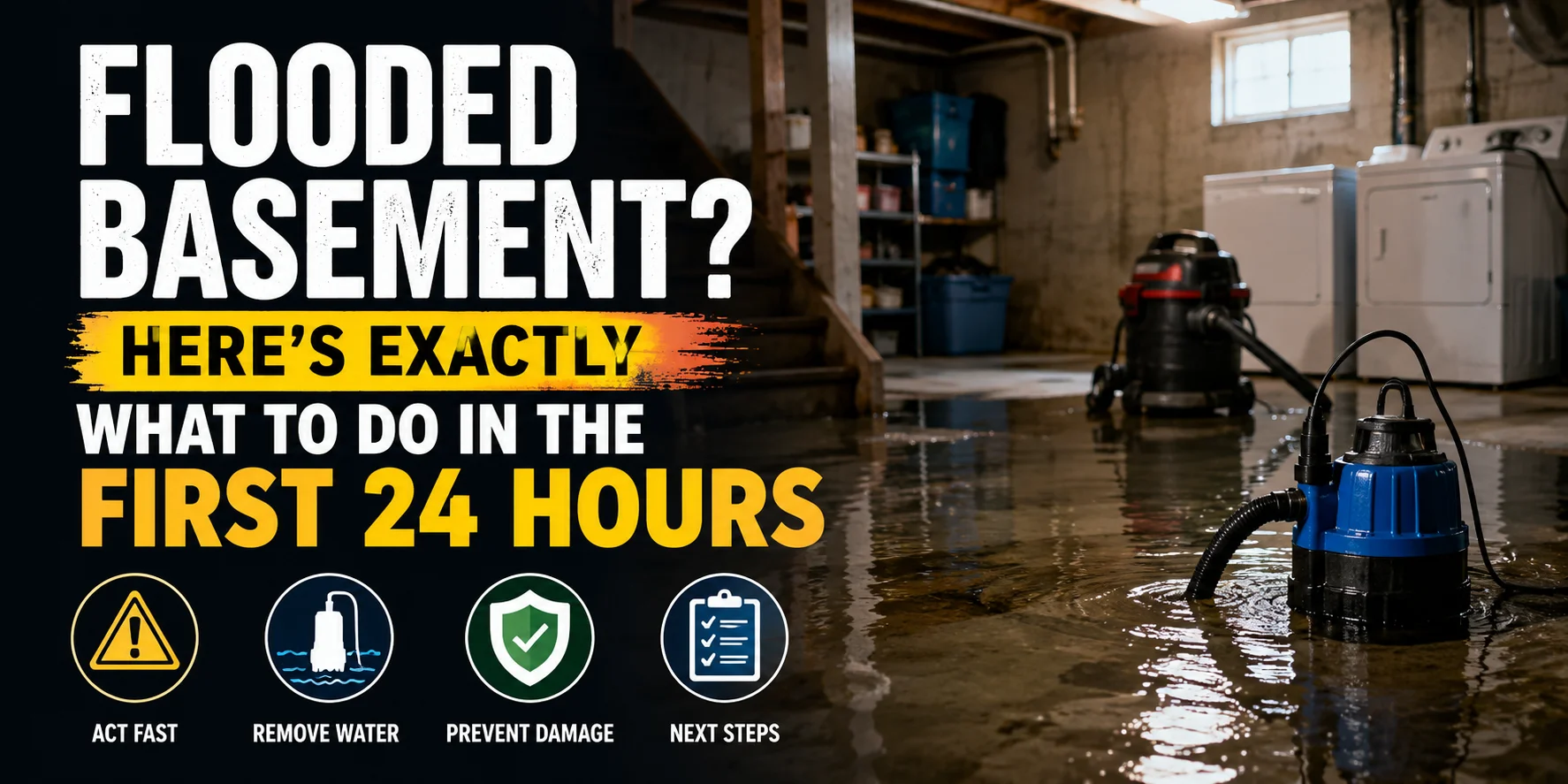
A flooded basement can go from a minor inconvenience to a major disaster in just a few hours. Whether you’re dealing with water in the basement after rain, a sump pump failure, a burst pipe, or groundwater seepage, the first 24 hours are critical. Fast action can reduce structural damage, prevent mold growth, save personal belongings, and lower restoration costs.
Water is rising in your basement right now, or it happened overnight and you just found it. Either way, you don’t need a long explanation, you need a clear checklist. Here it is, in the order emergency restoration technicians actually follow.
Call now: Your 24/7 Emergency Line a certified technician can be on-site within the hour to stop the damage before it spreads.
What to Do When Your Basement Floods
- Turn off electricity to the basement at the breaker panel — never enter standing water if outlets or cords are submerged.
- Identify and stop the water source if it’s safe (shut the main water valve, unplug a failed sump pump, or wait out storm runoff).
- Photograph and video everything before you touch anything — this documentation is critical for your insurance claim.
- Call your insurance company to open a claim and ask about coverage for water damage and mold remediation.
- Remove standing water gradually, not all at once, to avoid wall or foundation damage from sudden pressure changes.
- Start drying within 24 hours using fans, dehumidifiers, and open windows (if humidity outside is lower than inside) to prevent mold growth.
- Call a certified water damage restoration company if water covers more than a few inches or has been standing more than a few hours.
Below, we break down each step and explain the “why” behind it so you can act fast and avoid the mistakes that turn a bad day into a five-figure repair bill.
Read more about this topic: Ultimate Guide To Water Damage Restoration.
Step 1: Turn Off the Power Before You Do Anything Else
This is the single most important safety step, and it’s non-negotiable. Water and electricity are a lethal combination, and basements are full of both outlets, extension cords, water heaters, and furnace wiring are often at or near floor level.
- If the breaker panel is not in standing water, turn off power to the basement circuits immediately.
- If the panel itself is wet or submerged, do not touch it. Call your utility company or an electrician to cut power at the meter.
- Never step into standing water to reach a switch, cord, or appliance. A few inches of water can carry a fatal electrical charge if a live wire or outlet is submerged.
If anyone in the house has a pacemaker, is elderly, or is a child, keep them out of the basement entirely until power is confirmed off and the area is assessed.
Step 2: Stop the Water Source (If You Can Do It Safely)
Flooding usually comes from one of a few places, and each has a different fix:
- Sump pump failure: If your sump pump has stopped working due to a power outage, a stuck float switch, or a burned-out motor this is one of the most common causes of sudden basement flooding. Unplug the pump and, if you have a battery backup sump pump, switch it on.
- Burst pipe or water heater: Shut off the main water supply valve, usually located near the water meter or where the line enters the house.
- Heavy rain or storm runoff: Water in the basement after rain often points to hydrostatic pressure groundwater pushing against your foundation walls with enough force to seep through cracks, floor joints, or window wells. You can’t “shut off” a storm, but you can watch for continued seepage and keep the sump pump running if power allows.
- Sewer backup: If water is coming up through a floor drain or toilet, stop using all water in the house (don’t flush, don’t run washing machines) and assume this is Category 2 or Category 3 water contaminated water that requires professional handling, not a DIY cleanup.
If you’re not sure what’s causing the flood, don’t guess. A restoration technician can identify the source and stop it correctly the first time.
Read more: Sump Pump Installation Guide.
Step 3: Document Everything Before You Clean Up
Insurance adjusters need evidence, and once you start removing water or damaged items, that evidence disappears. Before you touch anything:
- Take wide photos of every room, then close-ups of damaged flooring, walls, furniture, and belongings.
- Record a slow walkthrough video narrating what happened and when you noticed it.
- Note the approximate water depth and how long it’s been standing.
- Keep receipts for anything you buy for cleanup (fans, dehumidifiers, wet vacs) — many policies reimburse these costs.
Do this even if you’re confident you’ll call a professional company it protects you either way and speeds up your claim.
Step 4: Call Your Insurance Company
Most homeowners’ policies distinguish between flooding (often excluded, requiring separate flood insurance) and water damage from a burst pipe or appliance failure (typically covered). Call your agent and describe exactly what happened cause matters more than the outcome for coverage purposes.
Read more: Does Homeowners Insurance Cover Mold Damage?
Ask specifically:
- Is this covered under my current policy, or do I need a separate flood claim?
- Is mold remediation included if it develops within the coverage window?
- Do you require a specific certified restoration company, or can I choose my own?
A licensed water damage restoration company can also work directly with your adjuster, provide moisture readings as documentation, and write an estimate that matches your carrier’s format which often speeds up approval.
Step 5: Remove Standing Water Gradually, Not All at Once
This step surprises a lot of homeowners: pumping out a flooded basement too quickly can actually cause more structural damage.
Here’s why. When water floods a basement, it often equalizes pressure on both sides of your foundation walls and slab. If you pump the interior dry in a few minutes while saturated soil outside is still pushing hard against the walls, that sudden pressure imbalance can crack the foundation, buckle walls, or heave the floor.
The rule of thumb: remove no more than one-third of the water per day until levels are low, especially if the flooding is extensive or the water has been standing for more than 24 hours.
For smaller amounts, a wet/dry shop vac works. For anything beyond a few inches, a submersible pump or a professional extraction crew with truck-mounted equipment is the safer and faster option.
Step 6: Start Drying Within 24 Hours to Prevent Mold
Mold spores are already present in every home; they just need moisture and time to grow. Most mold-friendly conditions develop within 24 to 48 hours of water exposure, which is why speed matters more than almost anything else in this process.
Once standing water is reduced:
- Run fans continuously, pointed across wet surfaces rather than at walls.
- Use a dehumidifier rated for the square footage of your basement — undersized units won’t pull enough moisture from the air.
- Open windows only if outdoor humidity is lower than indoor humidity; otherwise, you’re adding moisture, not removing it.
- Remove wet carpet, padding, and cardboard boxes — porous materials hold moisture and are usually not salvageable after significant flooding.
- Pull baseboards and check drywall for wicking (water climbing the wall) — drywall that’s absorbed water more than a couple of inches up typically needs to be cut and replaced.
If you notice a musty, wet basement smell even after visible water is gone, that’s often a sign moisture is trapped behind walls or under flooring where fans and dehumidifiers can’t reach it. This is one of the clearest signs it’s time to call in equipment-grade drying and moisture meters.
Step 7: Know When to Call a Professional Restoration Company
DIY cleanup can handle small, clean-water incidents a few inches from a supply line leak, cleaned up within hours. See 10 water damage sign then call a certified water damage restoration expert immediately if:
- Water covers more than 2–3 inches of floor space.
- Water has been standing for more than 6–8 hours.
- The water source is a sewer backup or anything potentially contaminated (Category 2 or Category 3 water).
- You see or smell signs of existing mold.
- Drywall, insulation, or flooring has visibly absorbed water.
- You have finished walls, flooring, or a furnished basement with real value at risk.
Professional crews bring truck-mounted extraction, industrial dehumidifiers, and moisture meters that read inside walls and under subfloors tools that catch hidden moisture a box fan simply can’t reach. That difference is often what separates a full recovery from a mold remediation project six weeks later.
Preventing the Next Flood: Long-Term Basement Waterproofing
Once your basement is dry, it’s worth addressing why it flooded in the first place. Common long-term fixes include:
- Sump pump installation or backup system: A battery or water-powered backup keeps your pump running during power outages — often the exact moment you need it most.
- French drain installation: A French drain redirects groundwater away from your foundation before it can build up hydrostatic pressure against your walls.
- Interior or exterior waterproofing membrane: A waterproofing membrane creates a barrier between your foundation and the surrounding soil, blocking moisture from migrating through concrete pores and cracks.
- Grading and gutter checks: Simple fixes like extending downspouts and correcting yard grading away from the foundation prevent a large share of repeat flooding.
A restoration and water extraction company that also handles waterproofing can assess your specific failure point and recommend the right combination rather than a one-size-fits-all fix.
What Causes Wet Basement Smell After Flooding?
A persistent wet basement smell is usually caused by moisture that remains hidden after cleanup.
Common causes include:
- Damp insulation
- Mold growth
- Wet drywall
- Saturated concrete
- Organic debris
If your basement still smells musty after drying, hidden moisture may still be present behind walls or beneath flooring.
Odor removal often requires:
- Deep cleaning
- Structural drying
- Antimicrobial treatment
- Air scrubbing equipment
Ignoring the smell usually allows the problem to worsen.
Can You Clean Up a Flooded Basement Yourself?
Small leaks involving clean water may sometimes be manageable.
However, DIY cleanup is often risky when:
- Water exceeds one inch deep
- Electrical systems are affected
- Water has remained longer than 24 hours
- Sewage contamination exists
- Mold is visible
Professional flooded basement cleanup services provide faster extraction, better drying, and lower long-term repair costs.
Basement Flooding Solutions That Prevent Future Problems
Once cleanup is complete, prevention becomes the next priority.
Install a Backup Sump Pump
Battery backup systems continue operating during power outages when flooding risks are highest.
Upgrade Drainage Systems
Proper grading and drainage direct water away from your foundation.
Install a French Drain
French drain systems collect groundwater and redirect it away from the home. This is one of the most effective long-term basement flooding solutions.
Seal Foundation Cracks
Even small cracks can allow water intrusion under hydrostatic pressure.
Professional sealing can reduce future risks.
Apply Waterproofing Membrane
Exterior waterproofing membranes provide an additional barrier against groundwater intrusion.
Maintain Gutters and Downspouts
Overflowing gutters often contribute to foundation water problems. Downspouts should discharge water several feet away from the home.
How Fast Does Mold Grow After Basement Flooding?
Under the right conditions, mold can begin growing within 24 to 48 hours.
Factors that accelerate growth include:
- Warm temperatures
- High humidity
- Organic building materials
- Poor ventilation
This is why immediate drying and dehumidification are so important. Early intervention can often prevent expensive mold remediation projects later.
The First 24 Hours Determine Everything
The first day after a basement flood often determines whether you face a straightforward cleanup or months of expensive repairs.
Waiting too long increases the risk of:
- Mold growth
- Structural damage
- Flooring replacement
- Odor issues
- Higher restoration costs
If you’re dealing with a flooded basement, don’t wait for the damage to spread.
Contact a professional flooded basement cleanup team that offers 24/7 emergency response and water damage restoration services. Immediate action protects your home, your belongings, and your peace of mind.
For complete structural drying and restoration, ask about restoration services and emergency response options available in your area around the clock.
Frequently Asked Questions
How long does it take for mold to grow after a basement flood?
Mold can begin developing within 24 to 48 hours of water exposure in the right conditions, which is why drying quickly is more important than drying perfectly.
Should I turn off my sump pump if the basement is already flooded?
No — keep it running if it’s still working. Only unplug it if it has failed, is sparking, or is fully submerged and unsafe to touch.
Will homeowners insurance cover a flooded basement?
It depends on the cause. Sudden water damage from a burst pipe or appliance failure is often covered, while flooding from external groundwater or storm surge typically requires separate flood insurance. Confirm directly with your carrier.
Can I use a regular shop vac to clean up a flooded basement?
A wet/dry shop vac works for small amounts of clean water. For anything more than a few inches, standing water from an unknown source, or water that’s been sitting for hours, a submersible pump or professional extraction is safer and faster.
What does a wet basement smell mean if the floor looks dry?
A musty odor after visible water is gone usually means moisture is trapped behind walls, under flooring, or in insulation areas fans alone can’t dry. This is a strong signal to bring in professional moisture detection equipment.